
Table of Contents
Introduction
Every wedding season, retailer shelves tell the same story before it begins. The shops that stocked the right designer sarees in the right quantities sold out before the season peaked. The shops that relied on last year’s collection or sourced late spent the rest of the season discounting.
The designer saree category is not driven by chance. It is driven by trends that are highly predictable for anyone paying attention to wedding functions, bridal demands, and the evolving tastes of Indian women between the ages of 20 and 45. For B2B buyers, that predictability is an opportunity, and this guide is designed to help you use it.
We cover the 7 most in-demand designer saree styles for 2026’s wedding season, the colour trends your collection must include, a practical stocking framework for retailers, and the sourcing pathways available for wholesalers, boutique brands, and export buyers.
All styles discussed here are available in bulk supply, custom designs, and private label manufacturing directly from Tapi Tara, Surat’s trusted saree manufacturer, with factory-direct pricing, consistent quality, and pan-India delivery.
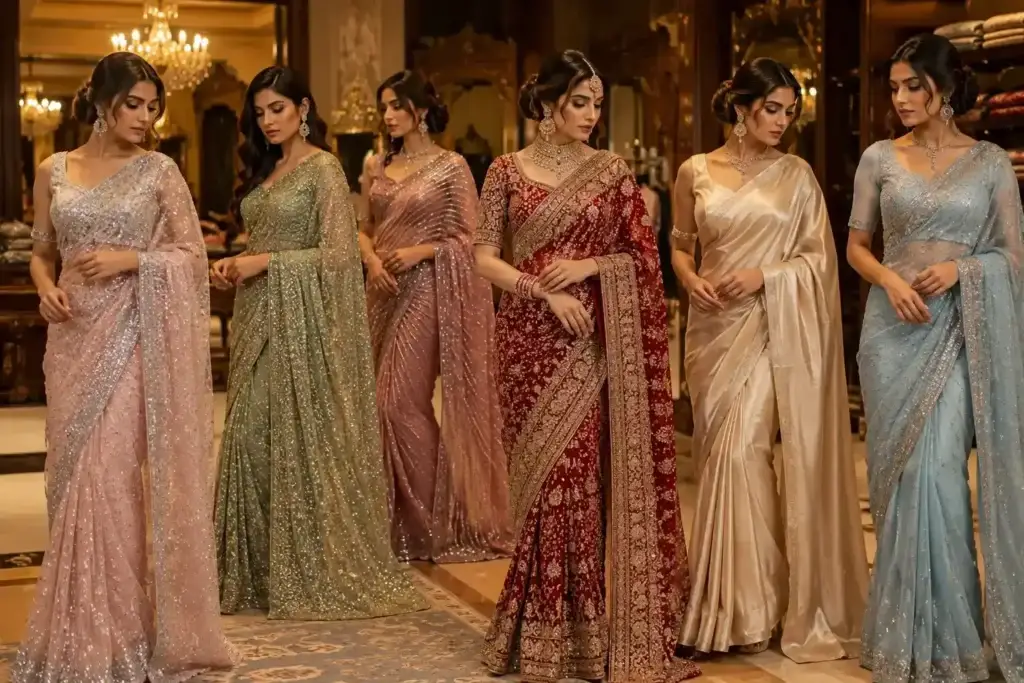
Why Designer Sarees Dominate Every Wedding Season: The Market Reality
India’s wedding saree market is not seasonal in the traditional sense. With wedding seasons spread across multiple calendar windows, November to February, April to May, and September to October, demand for designer sarees is active for most of the year. The peak intensity of each season simply changes, not the underlying demand.
According to FICCI 2025 data, the designer saree segment in India is valued at Rs. 1,240 crore and is growing at 12 to 14 percent annually. The 2026 landscape reflects consistent demand themes: sustainability-conscious fabrics, comfort-first drapes, bold prints that photograph well, and pastels that look fresh in daylight, all while the wedding season maintains its position as the single largest driver of designer saree purchases.
For retailers and wholesalers, the strategic insight is this: the buyers walking into your store during wedding season are not browsing. They are ready to buy. The question is whether your collection is ready for them. Getting that question right begins with understanding exactly which styles are trending right now.
The designer saree buyer in 2026 wants tradition without heaviness, embellishment without excess, and a piece that looks as extraordinary in a wedding photo as it does in person.
The 7 Most In-Demand Designer Saree Styles for Wedding Season 2026
1. Swarovski Work Designer Sarees, Premium Retail's Bestseller
Swarovski crystal embellishments on sarees have crossed from occasion wear into the most sought-after category for premium retail buyers. The reason is visual impact. A Swarovski work saree catches light from every angle, creating a brilliance that photographs exceptionally well and commands strong retail pricing. In an era where weddings are documented on professional cameras and shared widely on social media, this quality matters more than it ever has.
For retailers targeting the premium segment, Swarovski work sarees consistently outperform their price category in terms of sell-through rate. Buyers pay the premium because the product earns attention and drives compliments, which creates repeat buyers for your store.
Tapi Tara’s Swarovski Work Sarees are manufactured in-house in Surat with consistent crystal quality and finish standards. They are available in bulk for retail buyers and in mixed collections for boutique owners wanting a curated premium range.
B2B Stocking Insight: Stock Swarovski work sarees in deep jewel tones, emerald, royal blue, burgundy, and gold, for wedding and reception events. These colour families have the strongest, consistent sell-through in this work category.
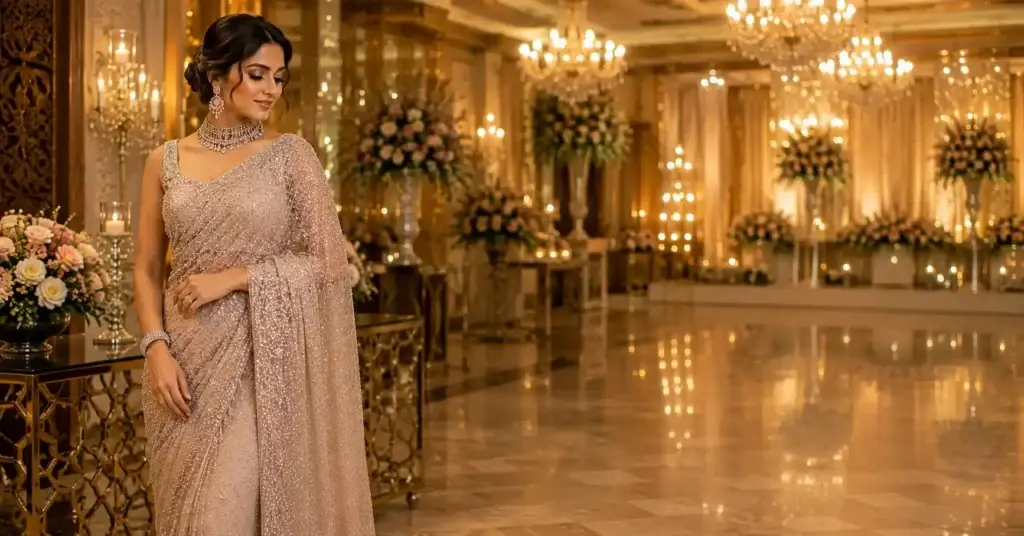
2. Heavy Bridal Embroidered Sarees, The Centrepiece of Every Bridal Collection
No designer saree collection for the wedding season is complete without heavy bridal embroidered sarees. These are the pieces that define a bridal boutique’s identity, the sarees that brides specifically seek out, try on multiple times, and ultimately purchase after deep consideration. The buyer conversion rate for heavy bridal embroidered sarees is lower than lighter pieces, but the average order value and the trust they build for your store are irreplaceable.
In 2026, silk sarees like Kanjivaram and Banarasi continue to dominate the trending bridal choices, featuring rich texture, intricate zari work, and designs that carry genuine traditional heritage. At the same time, modern embroidery patterns using metallic threads, mirror work, and three-dimensional floral motifs are finding strong demand among younger brides who want the grandeur of a bridal saree with a contemporary visual language.
Tapi Tara’s Bridal Work Sarees and Heavy Bridal Work Sarees are crafted with in-house embroidery at the Surat facility, ensuring quality consistency across bulk orders, critical for retailers who need every piece to hold its own on display.
B2B Stocking Insight: Stock 3 to 5 hero bridal pieces per collection cycle. These are display anchors that drive footfall. Pair them with mid-range reception and party wear sarees for cross-purchase conversion.
3. Sequin and Zarkan Work Sarees, The Reception and Cocktail Staple
Sequin and Zarkan work sarees are among the fastest-moving categories in the designer saree market for the wedding season stocking. They sit in the sweet spot between heavy bridal and casual party wear, glamorous enough for a wedding reception, light enough for a sangeet, and versatile enough for multiple functions across a wedding season.
For retailers and online sellers, this versatility is the commercial advantage. A customer who attends multiple weddings in a season is significantly more likely to invest in a sequin or Zarkan work saree than a single-occasion heavy bridal piece. The repeat-purchase logic makes this category essential for volume-driven retail and Instagram resellers.
Tapi Tara’s Sequin Work Sarees and Zarkan Work Sarees are available in a wide range of colour combinations and fabric bases, including chiffon and satin, giving retailers maximum flexibility for their target buyer preferences.
B2B Stocking Insight: Stock sequin and Zarkan work sarees in a minimum of 5 to 6 colour options per style. Guests attending multiple weddings want to differentiate their looks, and colour variety drives repurchase from the same buyer.
4. Stone Work and Cut Dana Sarees, Mid-Range Volume Movers
Stone work and cut dana sarees are the backbone of a high-performing wedding season collection. They deliver visible embellishment and excellent visual appeal at a price point that reaches a broader customer base than premium Swarovski or heavy bridal pieces. For retailers targeting middle-income wedding shoppers and for wholesalers building high-volume collections, this category produces the most consistent unit sales per season.
Cut dana work, in particular, has seen rising demand in 2026 because its light-catching facets create a sparkle that competes visually with more expensive embellishments at a significantly more accessible price. For boutique owners stocking for brides’ families, mothers, aunts, sisters, stone and cut dana sarees offer exactly the right combination of occasion-appropriate glamour and value.
Tapi Tara’s Stone Work Sarees and Cut Dana Work Sarees are consistent bestsellers in the Surat wholesale market and are available in single-design bulk and mixed-catalogue formats for retailers wanting maximum collection coverage.
5. Satin and Fendi Satin Designer Sarees, Modern Elegance at Scale
Satin fabric sarees have emerged as one of the dominant design languages in 2026’s wedding season. The fabric’s natural lustre, elegant drape, and smooth surface provide an excellent base for embellishments while standing beautifully as a relatively plain designer piece for guests and family members who prefer understated elegance over heavy embroidery.
Fendi satin, in particular, combines the visual richness of satin with a slightly structured texture that holds embellishments exceptionally well and drapes with a graceful weight that makes the wearing experience as satisfying as the appearance. For boutique owners curating a collection that serves both guests and the bride’s family, satin and Fendi satin sarees cover the widest demographic range of any fabric category.
Browse Tapi Tara’s Satin Fabric Sarees and Fendi Satin Sarees, both available in a complete range of wedding-appropriate colour families, with embellishment options available for customisation.
B2B Stocking Insight: Satin sarees in pastel and muted tones (blush pink, champagne, sage green, powder blue) sell fastest for day functions and family wear. Stock deep tones (wine, navy, bottle green) for evening and reception occasions.
6. Patola and Handwork Sarees, Heritage Value for Discerning Buyers
The 2026 wedding saree market has seen a meaningful and growing revival of heritage-value pieces. Buyers are no longer just purchasing fabric; they are investing in cultural continuity and regional craft identity. Patola sarees and handwork pieces carry this heritage narrative most powerfully. For boutique owners serving discerning buyers who want something distinctive and culturally resonant, these categories represent high-value, low-competition inventory.
Patola sarees, with their geometric weave patterns and rich colour traditions, are increasingly sought after by NRI buyers and premium Indian shoppers who understand their craft significance. Handwork sarees offer a unique selling proposition of artisanal individuality that mass-market options cannot replicate.
Tapi Tara’s Patola Fabric Sarees and Handwork Sarees are sourced and manufactured with consistent quality from Surat, available in bulk for retailers who want to carry heritage categories alongside their mainstream wedding season stock.
7. Lightweight Designer Sarees, The Practicality Trend That Is Driving Sales
Perhaps the most commercially important trend in 2026’s designer saree market is the rise of lightweight designer sarees as a genuine premium category. Modern Indian women, whether attending weddings as guests, working as professionals, or simply wanting to wear sarees more frequently, are actively seeking designer sarees that can be worn comfortably for extended periods without physical fatigue.
This demand has made comfort-first drapes and lightweight fabrics one of the strongest market growth themes of the season. Chiffon, lightweight satin, and purpose-engineered lightweight fabrics in the 60 GSM range are seeing strong demand from retailers whose buyers want both the beauty of a designer saree and the ease of wearing it for a full wedding day.
Tapi Tara’s Lightweight Work Sarees, Chiffon Fabric Sarees, and 60 GSM Lightweight Fabric Sarees are specifically designed for this growing buyer segment, full embellishment and designer quality in a genuinely comfortable, wearable weight.
Wedding Season Colour Trends Your Collection Cannot Miss
Colour is the first decision a buyer makes when considering a saree. Getting your colour mix right determines whether your collection is seen as current or dated before a single design is evaluated.
Pastels and muted elegance continue to dominate daytime and family wedding functions. Soft pastels, light pink, sage green, powder blue, and champagne, offer freshness and elegance, making them ideal for daytime functions. These are strong performers for Lightweight Work Sarees and satin-based designer pieces.
Jewel tones for evening and reception: Royal blue, emerald, burgundy, and deep gold remain the strongest performers for reception and cocktail occasion sarees. For Swarovski Work Sarees and Sequin Work Sarees, these tones create the maximum visual impact that evening events demand.
Metallic and shimmer finishes are having an extended moment in 2026. Shimmer Fabric Sarees in gold, rose gold, and silver bases are performing strongly across reception and sangeet occasions, particularly among younger buyers.
Bold contrast borders and pallus are emerging as the defining design element of 2026’s wedding sarees. A relatively understated body with a bold, heavily worked pallu and border creates a look that photographs powerfully and satisfies both traditional and modern preferences simultaneously.
How to Stock Your Wedding Season Designer Saree Collection, A B2B Guide
The difference between a wedding season collection that sells out and one that leaves you with excess inventory at the end of the season is usually not design taste. It is a stocking proportion. Here is a practical framework for building a high-converting wedding season designer saree inventory.
40% of your collection: Mid-range volume movers. Stone work, cut dana, and Zarkan sarees in the Rs. 1,500 to Rs. 4,000 retail range move the highest volume per season. These serve wedding guests, the bride’s family, and repeat buyers across multiple functions.
30% of your collection: Premium and occasion-specific pieces. Swarovski Work Sarees, Heavy Bridal Work Sarees, and Reception Wear Sarees in this tier drive your average order value and your store’s reputation for quality.
20% of your collection: Lightweight and everyday-glamour sarees. Chiffon Sarees and 60 GSM Lightweight Sarees serve the growing segment of buyers who want sarees for multiple occasions without the weight of heavy embellishment.
10% of your collection: Heritage and statement pieces. Patola Sarees and Handwork Sarees serve premium buyers and create a perception of curation and depth that elevates your entire store’s positioning.
Order new season stock at least 45 to 60 days before your peak wedding season begins. Tapi Tara offers advanced bulk booking with guaranteed delivery timelines. Plan your stocking cycle accordingly.
Designer Sarees for Every Wedding Function, Your Sourcing Map
Indian weddings unfold across multiple functions, and each function has a distinct aesthetic language. Retailers and boutique owners who stock across all key wedding functions serve their buyers more completely, and earn higher total basket values per customer relationship.
Haldi and Mehndi: Light, bright, and affordable. Affordable Work Sarees and lighter embellished pieces in yellow, green, and orange tones. These sell in volume rather than a premium margin.
Sangeet: Bold colours and comfortable fabric. Sequin Work Sarees, Shimmer Fabric Sarees, and Fancy Work Sarees in vibrant tones are the strongest performers for sangeet function buyers.
Wedding Ceremony: Heritage and richness. Embroidered Work Sarees, Bridal Work Sarees, and Heavy Work Sarees for the bride. For family and guests, Stone Work Sarees and Zarkan Work Sarees deliver the right level of occasion-appropriate grandeur.
Reception: Modern glamour and photography-ready finish. Swarovski Work Sarees, Reception Wear Sarees, and Party Wear Work Sarees in deep jewel tones dominate this function.
Festival Wear: Festival Wear Work Sarees that transition easily from Navratri and Diwali to general festive season occasions extend your designer saree category beyond the wedding calendar.
Private Label Designer Sarees, For Boutiques and Instagram Brands
One of the fastest-growing segments in India’s designer saree B2B market is the boutique owner and Instagram seller who wants to source sarees under their own brand label. The social commerce revolution has created thousands of small fashion businesses whose competitive advantage depends on having exclusive or branded inventory that customers cannot find elsewhere.
Private label designer saree manufacturing solves this problem completely. You share your design direction, colour preferences, and label requirements with the manufacturer. The factory produces to your specification, labels every piece with your brand, and ships to you or directly to your customers. Your boutique or Instagram shop carries inventory that is genuinely yours.
Tapi Tara’s Private Label Programme: Share your design, fabric, and colour preference. Our design team at the Surat factory develops samples to your specifications within 24 to 48 hours. Once confirmed, production begins with your brand label attached to every piece. Orders are packed securely and dispatched pan-India or internationally. Whether you are building a 50-piece initial collection or scaling to 5,000 pieces per season, Tapi Tara’s private label programme grows with your brand.
Learn more about Tapi Tara’s Bulk Order and Private Label capabilities and the Manufacturing Facility that makes consistent quality at any volume possible.
Export Buyers, Why Surat's Tapi Tara Is Your Ideal Sourcing Partner
The demand for Indian designer sarees in international markets, the UAE, USA, UK, Australia, Canada, and Southeast Asia, is driven almost entirely by India’s diaspora community and the growing global interest in Indian ethnic wear. NRI brides, their families, and Indian cultural communities abroad are active buyers of exactly the designer saree styles this guide covers.
For international importers and export buyers, sourcing directly from a Surat-based manufacturer like Tapi Tara offers four distinct advantages. First, factory-direct pricing eliminates the margin layers added by intermediary distributors. Second, Surat’s manufacturing infrastructure means genuine production capacity and consistent quality across large volumes. Third, Tapi Tara’s export experience across 20-plus countries means the documentation, packaging, and logistics coordination are managed without the friction that first-time exporters often encounter. Fourth, custom manufacturing capability means export buyers can request designs specific to their market preferences rather than choosing from a fixed catalogue.
Visit Tapi Tara’s Export page to understand the full scope of our international supply capability and to initiate an export sourcing conversation with our trade team.
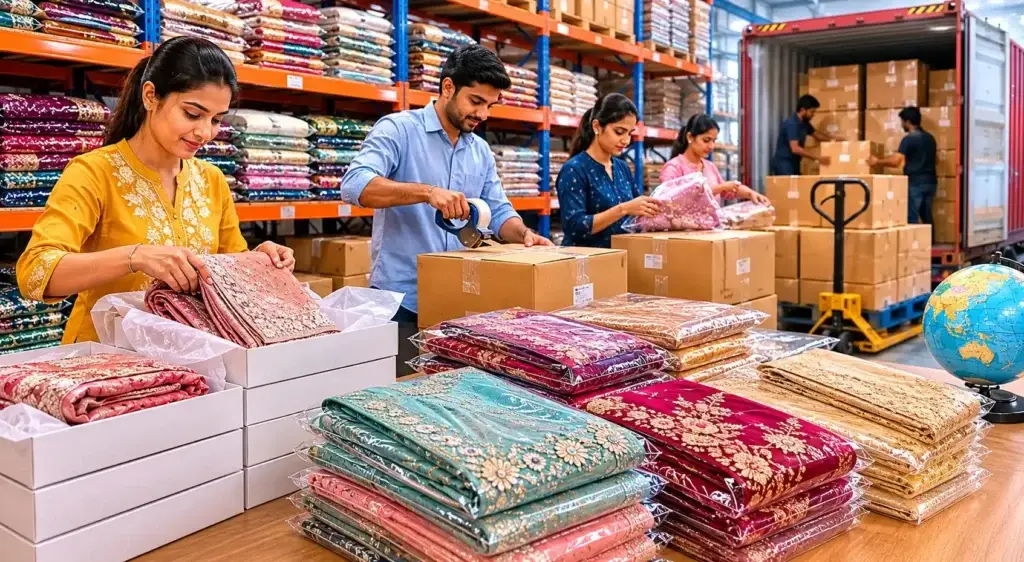
Conclusion: Build the Collection Your Buyers Cannot Resist
The wedding season of 2026 is not a moment to wait and watch. The designer saree trends are clear, the demand is predictable, and the buyers, brides, their families, and guests are actively looking for collections that combine the grandeur of occasion wear with the design sensibility of a genuinely current wardrobe.
The seven styles covered in this guide, Swarovski work, heavy bridal embroidery, sequin and Zarkan, stone work and cut dana, satin and Fendi satin, heritage patola and handwork, and lightweight designer sarees, represent the complete spectrum of what your buyers will be looking for this season. The retailers and wholesalers who stock intelligently across this spectrum will define the season. Those who wait will spend it trying to reorder.
The right collection starts with the right manufacturing partner, one who can supply the styles your buyers want, in the quantities your business requires, at the factory pricing that protects your margins.
Frequently Asked Questions
Swarovski work sarees, heavy bridal embroidered sarees, sequin and Zarkan work sarees, stone work sarees, and satin fabric designer sarees are the highest-demand categories for the wedding season 2026. Each caters to a different wedding function and price point, making a balanced collection across all five categories the strongest stocking strategy.
Tapi Tara supports bulk orders from small retail quantities to large wholesale volumes. Whether you need 50 pieces or 5,000, the Surat factory fulfils orders with consistent quality at every scale. Contact the Tapi Tara team through the bulk order page at tapitara.com/bulk-order/ for specific MOQ and pricing information based on your requirements.
Yes. Tapi Tara offers complete private label manufacturing, from your design and fabric specification through to your brand label, packaging, and dispatch. The process starts with sharing your design preference, and the Surat factory handles production, labelling, and delivery. This service is available for both domestic boutique owners and international export buyers.
Stone work, cut dana, and sequin work sarees in the mid-range price bracket consistently move the highest unit volumes for wholesale buyers. These styles serve wedding guests and the bride’s family members who attend multiple functions across a season. Swarovski work and heavy bridal sarees move at lower volumes but deliver higher per-unit margins.
Yes. Tapi Tara exports to 20-plus countries, including the UAE, USA, UK, Australia, and Canada. The Surat factory handles all export documentation, quality control, and international shipping coordination. Custom designs for specific market preferences are also available. Visit tapitara.com/export/ to initiate an export enquiry.
Pastels and muted tones (blush pink, champagne, sage green, powder blue) are trending strongly for daytime and family functions. Jewel tones (emerald, royal blue, burgundy, deep gold) dominate reception and evening occasions. Metallics and shimmer finishes in gold and rose gold are performing strongly across sangeet and party wear categories.
Retailers and wholesalers should place wedding season orders at least 45 to 60 days before their peak season begins. This allows time for production, quality checking, dispatch, and any adjustments needed. Tapi Tara accepts advance bookings and provides guaranteed delivery timelines for pre-season orders. Contact the team through tapitara.com/contact-us/ to plan your season stocking cycle.
Hi, this is a comment.
To get started with moderating, editing, and deleting comments, please visit the Comments screen in the dashboard.
Commenter avatars come from Gravatar.