Top Bridal Saree Trends for Weddings in 2026

Table of Contents

Introduction

Your wedding day is one of the few occasions in life where the outfit you choose carries the weight of an entire moment. It is not just fabric and thread; it is the memory you will return to for decades. And for the Indian bride, no garment carries that memory quite like a bridal sarees. In 2026, the landscape of bridal fashion is more exciting and more nuanced than it has ever been, with designers and brides together rewriting the rules of what a wedding drape should look like, feel like, and mean.

This guide is for every bride and every family member who loves her and who wants to understand what is truly trending this season so that the choice ahead feels less overwhelming and far more joyful. Whether you are drawn to the grandeur of a heavily embellished silk saree for a bride or quietly leaning towards something minimal and modern, 2026 has something extraordinary waiting for you.
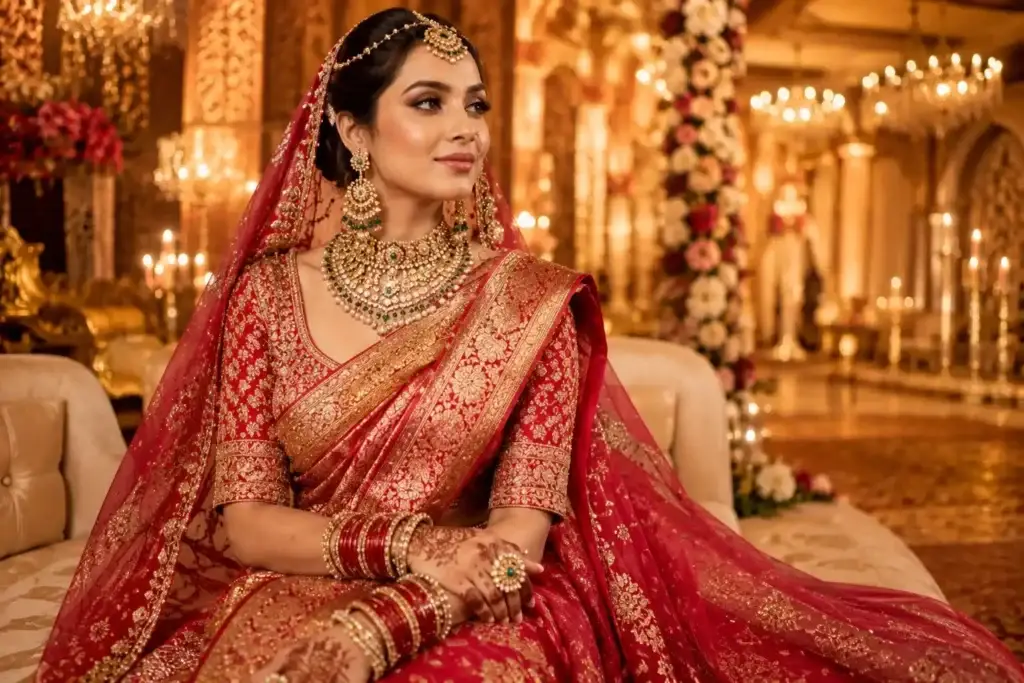
Trending bridal saree styles for weddings in 2026

Why 2026 is a Turning Point for Bridal Saree Fashion

Something significant has shifted in the world of Indian bridal fashion over the last two years. The post-pandemic generation of brides has entered the wedding market with a clarity of vision that was not quite as visible before. They know what they want, they research their choices with care, and they are no longer bound by convention simply because it is convention. This shift has forced designers, retailers, and the entire bridal industry to evolve, and the result is a 2026 bridal collection landscape that is simultaneously more traditional and more progressive than any previous era.

Wedding photographers, stylists, and fashion editors who cover the Indian bridal circuit consistently report that 2026 brides are placing equal weight on personal comfort, cultural authenticity, and contemporary aesthetics. That three-way balance is producing some of the most compelling and genuinely wearable bridal fashion the country has seen in years.

How Modern Brides Are Redefining the Traditional Wedding Look

The idea that a bride must look a certain way, heavily embellished, draped in red, and adorned with maximum jewellery is giving way to something more personal and considered. Today’s bride is more likely to begin her search with the question “What will make me feel most like myself?” rather than “What does a bride typically wear?” This shift in search intent is reflected directly in the trends dominating 2026, where diversity of choice, silhouette, and color has never been greater within the world of the traditional wedding outfit.

From Runways to Real Weddings: What are Influencing 2026 Trends

The influence pipeline for bridal fashion has fundamentally changed. Celebrity weddings both within India and among the Indian diaspora globally now travel instantly through social media, carrying specific looks, designers, and styling details into the consciousness of millions of brides-to-be within hours. Designer bridal collections presented at fashion weeks in Mumbai, Delhi, and internationally are no longer just industry events; they are cultural moments that directly shape what brides ask for in boutiques and online stores months later. Understanding this pipeline helps explain why 2026 trends feel both aspirational and accessible at the same time.

Fabric Trends in Bridal Sarees for 2026

If there is one area where expertise genuinely matters in bridal shopping, it is fabric. The weight, texture, sheen, and drape of a fabric determine not just how a saree looks in photographs but how it feels across an eight-hour wedding day. In 2026, four fabric types are dominating the bridal sarees conversation.

Banarasi Silk: The Timeless Classic That Never Goes Out of Style

A Banarasi wedding saree remains the single most sought-after bridal drape in India year after year, and 2026 is no exception. The reason is simple: no other fabric offers the same combination of cultural gravitas, visual richness, and structural beauty. The zari work woven directly into the silk produces a sheen that photographs beautifully under both natural and artificial light, and the weight of a genuine Banarasi gives the drape a regal quality that lighter fabrics simply cannot replicate. In 2026, the trend within Banarasi will be toward slightly lighter weaves that retain the traditional aesthetic while offering greater comfort for full-day wear.

Kanjivaram Silk: South Indian Elegance for the 2026 Bride

For South Indian brides and increasingly for brides across the country who have fallen in love with its distinctive aesthetic, Kanjivaram silk occupies an almost sacred place in bridal culture. The characteristic temple borders, the contrasting pallu, and the deep, saturated colors of a traditional Kanjivaram wedding saree create a look that is both immensely powerful and deeply rooted in cultural identity. In 2026, designers are working with this heritage fabric in fresh ways, introducing unconventional color combinations and contemporary embellishments while carefully preserving the integrity of the weave itself.

Organza and Tissue: The New-Age Bridal Favorite

If Banarasi and Kanjivaram represent the grand classical tradition, the organza wedding saree is the contemporary chapter of the same story. Lightweight, sheer, and with a subtle stiffness that allows for dramatic silhouettes without the weight of silk, organza has captured the imagination of the modern bride entirely. In 2026, organza bridal sarees are being layered with delicate hand embroidery, floral applique, and three-dimensional embellishments that turn the fabric into something genuinely spectacular. The result is a drape that photographs like a dream and feels feather-light throughout the day.

Velvet and Georgette: When Luxury Meets Comfort

For winter weddings and brides who prioritize comfort alongside beauty, the velvet bridal saree has had a quiet but significant rise in 2026. The richness of velvet, the way it absorbs and reflects light, and the depth it gives to deep colors like burgundy, forest green, and midnight blue make it a genuinely luxurious choice for evening ceremonies. Georgette, meanwhile, continues to be the go-to fabric for brides who want movement and fluidity, particularly for receptions and sangeet functions where dancing is part of the evening.

Color Palette Trends: What Shades Are 2026 Brides Choosing?

Color is perhaps the most personal and emotionally loaded choice in the entire bridal sarees selection process. It is also the area where 2026 is most visibly departing from convention, with a growing number of brides making color choices that would have seemed unusual even five years ago.

Beyond Red: Pastels, Ivory, and Champagne Rising in 2026

Pastel bridal sarees in shades of blush pink, sage green, lavender, and powder blue have moved from a niche preference to a fully mainstream bridal choice in 2026. Ivory and champagne wedding drapes have seen particularly strong growth, driven in part by their versatility across skin tones and their ability to carry heavy embellishment without looking overwhelming. For the contemporary bride who wants to look modern while remaining within the cultural framework of a traditional wedding outfit, a champagne or ivory saree with gold zari embroidery is one of the most elegant choices the current season offers.

Classic Reds and Deep Maroons: Why They Remain the Gold Standard

For every bride who reaches for a pastel, there are two who remain deeply committed to the classic red or deep maroon bridal saree, and with very good reason. Red carries centuries of cultural significance in Indian wedding tradition, and there is a particular kind of confidence and joy that comes from honoring that tradition on one of life’s most significant days. In 2026, the trend within traditional red bridal sarees is towards richer, deeper tones of wine red, crimson, and dark maroon paired with gold embroidery that feels luxurious rather than excessive.

Choosing Your Bridal Saree Color by Skin Tone

Beyond trend, the most practically useful color guidance for any bride is understanding how different shades interact with her particular skin tone. Warm, golden, and olive undertones tend to be beautifully complemented by warm reds, deep oranges, rich greens, and mustard gold. Cool undertones with pink or bluish hues look most radiant in jewel tones: royal blue, deep purple, emerald green, and cool pink. For the bride with a deeper complexion, the full spectrum is genuinely available, with particularly stunning results in bright jewel tones and deep, saturated shades that might feel overwhelming on lighter skin.

Embroidery and Embellishment Trends Defining 2026

The embroidery on a bridal saree is where the true artistry of the garment lives, and in 2026, the range of approaches available to the modern bride spans from the maximalist grandeur of traditional zardozi to the restrained sophistication of minimal tonal embroidery.

Zardozi and Gota Patti: Heavy Embroidery for the Grand Wedding

Zardozi embroidery with its dense gold and silver metallic threads, semi-precious stones, and intricate motifs remains the pinnacle of formal bridal embellishment in 2026. For brides planning large traditional weddings where the visual scale of the occasion demands a correspondingly grand outfit, a zardozi-embellished bridal sarees delivers a presence that is simply unmatched. Gota patti work, with its characteristic ribbon-based embellishment in gold and silver, carries a similar richness but with a slightly more textural, dimensional quality that looks particularly beautiful on heavier silk fabrics.

Sequin and Mirror Work: Contemporary Bridal Glamour

For the younger bride or for wedding functions like the sangeet and reception where glamour takes precedence over tradition, sequin bridal sarees and mirror work wedding outfits have become the defining aesthetic of 2026. The way sequined fabric catches and refracts light under event lighting is genuinely spectacular, and when paired with a dramatic blouse design and minimal jewellery, the overall effect is a celebrity-quality look that feels entirely contemporary.

Minimal Embroidery: The Quiet Luxury Trend of 2026

Perhaps the most interesting trend in bridal embellishment for 2026 is the rise of what the fashion industry has begun calling “quiet luxury” in bridal wear sarees with tonal embroidery in the same shade as the base fabric, subtle thread work in muted gold, or delicate hand-painted motifs that reward close attention without announcing themselves from across the room. This minimalist bridal sarees aesthetic is particularly popular among destination wedding brides and those planning intimate ceremonies where the emphasis is on personal elegance rather than grand spectacle.

Blouse Designs and Draping Styles Every 2026 Bride Should Know

Trending Bridal Blouse Designs for 2026

The blouse has become as important a design statement as the saree itself in 2026 bridal fashion. Bishop sleeves, cold-shoulder cuts, structured peplum blouses, and dramatically embellished backless designs are all prominent in this season’s designer bridal collection offerings. The general principle that experienced stylists recommend is allowing one element, either the saree or the blouse, to carry the primary design statement, while the other plays a supporting role. A heavily embellished saree is almost always better served by a clean, well-cut blouse, while a simpler fabric like organza or georgette can support a blouse with significantly more drama.

Draping Styles That Flatter Different Body Types

The draping style of bridal sarees can be as transformative as the fabric itself. The lehenga-style drape, where the pleats are secured to give the silhouette the fullness and structure of a lehenga skirt, has been enormously popular in 2026 for its ability to create a voluminous, photogenic silhouette that moves beautifully on the dance floor.

The seedha pallu, which brings it across the front rather than over the shoulder, creates a cleaner, more structured look that tends to flatter a wider range of body types. For brides who want to minimize pre-ceremony anxiety, the pre-stitched saree, which eliminates the need for expert draping on the day, has become an increasingly mainstream choice even within the bridal category.

Pre-Stitched vs Traditional Drape: Which is Right for Your Wedding Day?

The honest answer is that both options are entirely valid, and the right choice depends completely on the individual bride’s priorities. A traditionally draped saree, when done well by an experienced draper, will always have a natural fluidity and movement that a pre-stitched version finds harder to replicate. But a pre-stitched bridal saree offers something equally valuable: the peace of mind of knowing that your outfit will look exactly right from the first moment of the ceremony to the last photograph of the evening, without the anxiety of adjustments or the risk of a drape shifting at an inconvenient moment.

Bridal Saree Jewellery and Accessory Pairing Guide for 2026

Gold, Kundan, or Polki: Choosing Jewellery for Your Bridal Saree

The jewellery that accompanies a bridal sarees should be chosen with the fabric and the embellishment in mind first and personal preference second. A heavily embellished Banarasi or Kanjivaram saree typically calls for classic gold jewellery temple sets, polki necklaces, or traditional jhumkas that carry the same cultural weight as the fabric itself. Lighter organza or georgette drapes, with their more contemporary aesthetic, invite more creative jewellery choices: layered kundan sets, delicate diamond pieces, or contemporary statement necklaces can all work beautifully depending on the overall look being assembled.

Hair, Makeup, and Footwear: Completing the 2026 Bridal Look

For makeup, 2026 bridal trends lean towards a skin-first approach with a flawless base with strategic emphasis on either the eyes or lips but rarely both simultaneously. The bold lip with otherwise minimal makeup remains one of the most consistently flattering and photographically strong choices for a bridal sarees look. For hair, the classic low bun with a maang tikka or floral adornment continues to be the most widely chosen style, though loose romantic waves and braided updos have gained significant ground, particularly among brides who wear organza or lighter fabrics. Footwear should always prioritize comfort for a full wedding day; embellished block heels, kolhapuris, or juttis all work beautifully with a traditional wedding drape.

Final Thoughts

Choosing bridal sarees in 2026 is less about following the season’s trends and more about finding the intersection between what is beautiful, what is culturally meaningful to you, and what will make you feel most authentically yourself on one of the most significant days of your life. The trends described here in fabric, color, embellishment, and styling are not prescriptions. They are possibilities. Use them as a starting point, let them inform your exploration, and then trust your own instinct when a particular saree makes you catch your breath.

That moment of recognition, more than any trend report, is how a bride knows she has found the right one. When you are ready to begin that search, explore Tapitara‘s handpicked bridal collection curated wedding drapes across every fabric, embellishment, and color story, all in one place. Visit Tapitara today and find the saree that was always meant to be yours.

Leave a Comment

Your email address will not be published. Required fields are marked *

Scroll to Top