
Table of Contents
Introduction
The Indian saree industry is one of the largest ethnic wear markets in the world, valued at over ₹47,000 crore and growing every year. For boutique owners, online sellers, exporters, and resellers, the success of your business depends almost entirely on the sourcing partner you choose. Finding a trustworthy Saree manufacturers in India can feel overwhelming when the market is flooded with thousands of suppliers, each promising the best price and quality. The truth is, not every vendor deserves your trust, and choosing the wrong one can cost you lakhs in damaged inventory and lost customers.
This complete guide walks you through everything you need to know from identifying genuine vendors to verifying their authenticity and building long-term sourcing relationships.
Why Choosing the Right Saree Supplier Matters
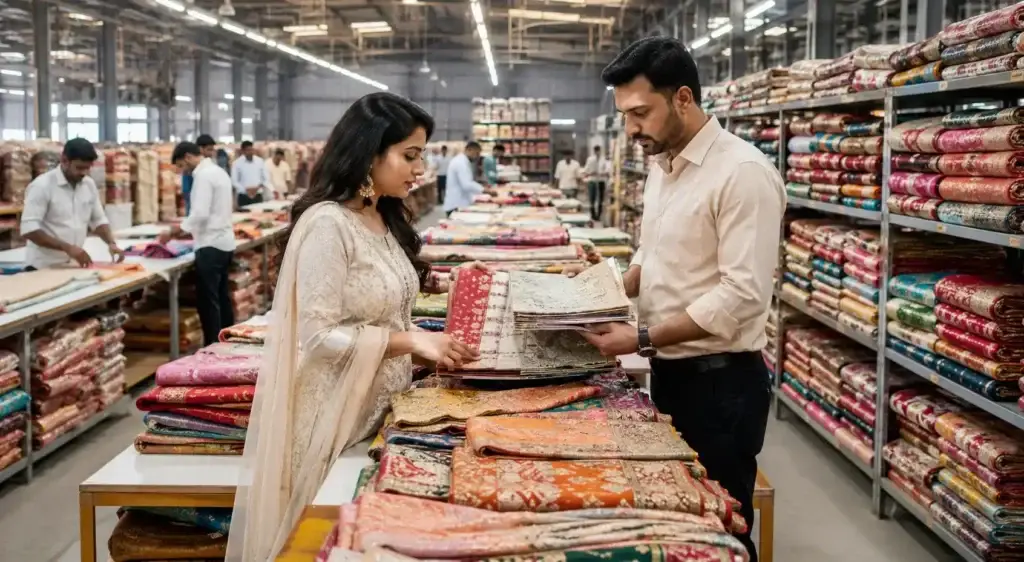
Your manufacturer is the silent backbone of your saree business. The fabric quality, stitching consistency, dye fastness, and delivery timelines you offer your end customers depend entirely on the wholesaler you partner with. A reliable supplier ensures premium materials, accurate finishing, and on-time shipments, three pillars that directly shape your brand reputation in a competitive market.
On the other hand, a careless or inexperienced vendor can sink your business in months. Common issues include fabric defects, color bleeding, sizing errors, late deliveries, and order cancellations during peak season. Many small businesses lose between ₹2 lakh and ₹5 lakh in their first year simply because they trusted the wrong supplier. A strong partnership, by contrast, helps you grow faster. When your wholesaler understands your design preferences, customer base, and pricing limits, they can offer customized collections, priority production slots during weddings and festivals, and better credit terms.
Types of Saree Producers You Will Find in the Market
Handloom Saree Weavers
Powerloom Saree Producers
Designer Saree Brands
Export-Oriented Suppliers
Key Qualities of Trustworthy Saree Manufacturers In India
Choosing the right vendor is never just about price. Several other factors determine whether a supplier deserves a place in your supply chain. Pay close attention to their years of operation, in-house production capacity, design catalog, and willingness to share factory photos, videos, or live walkthroughs.
A genuine wholesaler will always have a registered GST number, a verifiable physical address, and a proper product catalog. They will be transparent about MOQ, payment terms, lead time, and return policies. If a supplier hesitates to share these details upfront, treat it as a serious warning sign.
Industry certifications also matter. Look for marks such as the Silk Mark, Handloom Mark, GI tags, or ISO certifications, depending on your product category. These confirm that the supplier follows authenticity and quality standards approved by the Government of India and recognized by global buyers.
Step-by-Step Process to Find Trusted Saree Suppliers
Finding the right sourcing partner is a process, not a one-day task. Experienced buyers follow a structured approach instead of jumping at the first cheap quote they receive.
Start by clearly defining your business requirements: fabric type, target price range, MOQ comfort, design preferences, and ideal customer profile. A clear brief saves weeks of back-and-forth communication with potential vendors.
Next, research India’s major saree manufacturing hubs based on your product line. Surat dominates synthetic, printed, and embellished sarees. Varanasi is famous for Banarasi silk. Kanchipuram leads in pure South Indian silk. Kolkata produces lightweight tant and jamdani. Identifying the right hub immediately cuts your search time in half.
Then explore established B2B platforms and trade directories such as IndiaMART, TradeIndia, and ExportersIndia. Use filters like Verified Seller or TrustSeal to shortlist credible vendors. Instagram and LinkedIn are also excellent today, as many modern saree brands maintain active business profiles with real testimonials. Visiting textile trade fairs is another smart move. Events like Vastra by FICCI and Surat Textile Expo bring hundreds of suppliers under one roof. Finally, never underestimate referrals; speak to existing boutique owners and resellers who already source from the supplier you are considering.
How to Verify a Wholesaler's Authenticity
Verification is the most important step before placing a bulk order with any saree manufacturers in India. Start by checking the GST number on the official GST portal. Please verify the registered business name, address, and operational status. Next, request fabric samples before committing to large quantities. A genuine wholesaler will never deny sample requests, although they may charge a small, adjustable fee. Inspect samples carefully for fabric weight, dye stability, stitching quality, and overall finishing.
Whenever possible, schedule a factory visit. Walking through the production floor gives you a clear sense of their scale, hygiene, machinery, and worker conditions. If a personal visit is not feasible, ask for a live video tour over WhatsApp or Zoom. Honest vendors are always open to such requests.
Red Flags You Must Never Ignore
Some warning signs are simple to miss when you are excited about closing a deal. Stay alert for prices that seem unrealistically low; they almost always indicate compromised fabric, hidden charges, or short shipments. Avoid suppliers who pressure you into quick decisions, refuse to share their factory address, or demand full payment upfront without documentation.
Watch out for vague answers about lead times, missing GST invoices, and poor communication. Reliable Saree Manufacturers in India always operate with complete transparency because you value long-term relationships over one-time transactions.
Top Saree Manufacturing Hubs You Should Know
India’s saree industry is geographically diverse, and each region offers something unique. Surat in Gujarat is the country’s largest producer of synthetic, printed, and embellished sarees, supplying over 90% of India’s man-made fabric output. Varanasi remains the cultural heart of authentic Banarasi silk weaving, home to thousands of skilled handloom artisans. Kanchipuram in Tamil Nadu is globally recognized for its pure silk sarees featuring rich zari work and temple borders.
Kolkata produces lightweight Tant, Jamdani, and Baluchari sarees that suit both daily wear and festive occasions. Bangalore and Mysore specialize in soft, lustrous Mysore silk that appeals strongly to modern customers. Choosing the right hub depends entirely on your target audience. A boutique catering to brides may prioritise Kanchipuram or Varanasi, while an online store focused on affordable daily wear will find Surat the most profitable fit among all saree manufacturers in India.
Building Long-Term Relationships with Your Supplier
Conclusion
Finding the Right Saree Manufacturers In India, it is one of the most important decisions you will make as a business owner. The right partner ensures consistent quality, fair pricing, transparent communication, and reliable delivery, while the wrong choice can drain your profits and damage your brand in just one season. Take your time, verify every claim, and always begin with small trial orders before committing to large volumes. Your patience today will save you lakhs tomorrow.
If you are searching for verified, ethical, and experienced Saree Manufacturers in India, Tapitara is here to make your sourcing journey effortless. We connect boutique owners, online sellers, resellers, and exporters with authentic suppliers across Surat, Varanasi, Kanchipuram, Kolkata, and other major hubs, all under one trusted platform. No middlemen. No hidden charges. No quality compromises.
Skip the guesswork. Get verified vendors, genuine samples, and transparent pricing in just one click. Visit Tapitara today and discover the smartest way to source authentic sarees for your growing business.
Frequently Asked Questions
Surat in Gujarat is considered the largest saree manufacturing hub, producing millions of sarees daily and supplying to almost every state as well as global markets.
MOQs vary by supplier but generally range between 50 to 500 pieces per design. Many wholesalers offer lower MOQs for first-time buyers as a trial order.
Check their GST registration on the official portal, request fabric samples, read verified reviews, and if possible, schedule a factory visit or video tour before placing bulk orders.
Yes, many Indian wholesalers specialise in export orders with proper documentation, packaging, and shipping support to countries across the USA, UK, UAE, Canada, and Australia.