
Table of Contents
Introduction
If you run a boutique, a retail store or an online saree business, you already know that one wrong buying decision can sit on your shelf for an entire season. Choosing occasion-wise designer sarees is not about picking what looks beautiful in a catalogue. It is about knowing who will wear the saree, where, and at what price. This guide is written from the manufacturing side by a designer sarees manufacturer in India, and it gives you a repeatable way to make those decisions with less risk.
By the end, you will know how to turn an occasion into a buying brief, how to judge any saree with five simple filters, how to balance your range, and what to ask a supplier before placing an order.
How to Turn an Occasion into a Buying Brief
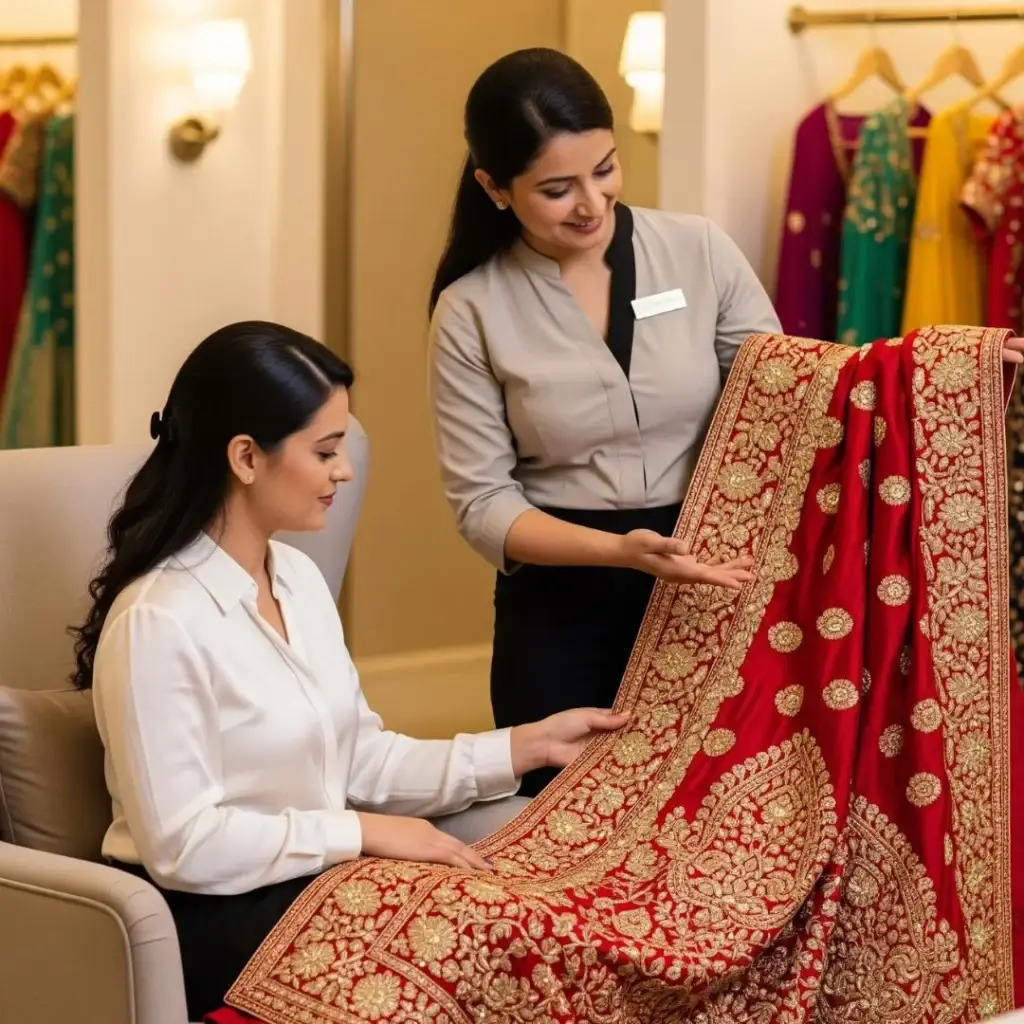
A wedding, a cocktail party and a festival gathering may all call for a designer saree, but each creates a completely different buying situation. “Wedding” is not a single category. It is a situation with many wearers, many functions and many budgets. Before choosing any design, answer four questions: who will wear the saree, where the event will take place, how many hours it will be worn, and what price the customer is comfortable paying.
Written down in a few lines, these answers become your occasion brief. A brief such as “mother of the bride, evening reception, indoor hall, five to six hours, mid-premium budget” immediately rules out a large number of designs. When you share this brief with a designer sarees manufacturer in India, the samples and quotations you receive also become far more accurate, because the maker understands the purpose behind your request.Wedding Buying: Role-Based Segmentation
The bride, the mother of the bride, close family members and wedding guests all wear sarees to the same event, yet their needs are very different. A bride usually wants heavy, statement pieces with rich embellishment and a strong pallu, and she is willing to spend more and wait longer. Family members look for dignified designs in colour palettes that sit well beside the bride in photographs. Guests prefer lighter sarees that are easier to carry but still look festive.
This means your wedding range should never be built around bridal pieces alone. Retailers often find that guest and family categories sell more frequently than bridal pieces, so a balanced bridal and wedding saree collection usually performs better than a top-heavy one. It also helps to work with a designer sarees manufacturer in India that can supply bridal, family and guest ranges together. Pre-wedding functions such as mehndi and sangeet lean towards lighter fabrics and brighter colours, while post-wedding functions like receptions create demand for elegant, mid-weight pieces.
Parties and Special Occasions: Planned vs. Impulse Demand
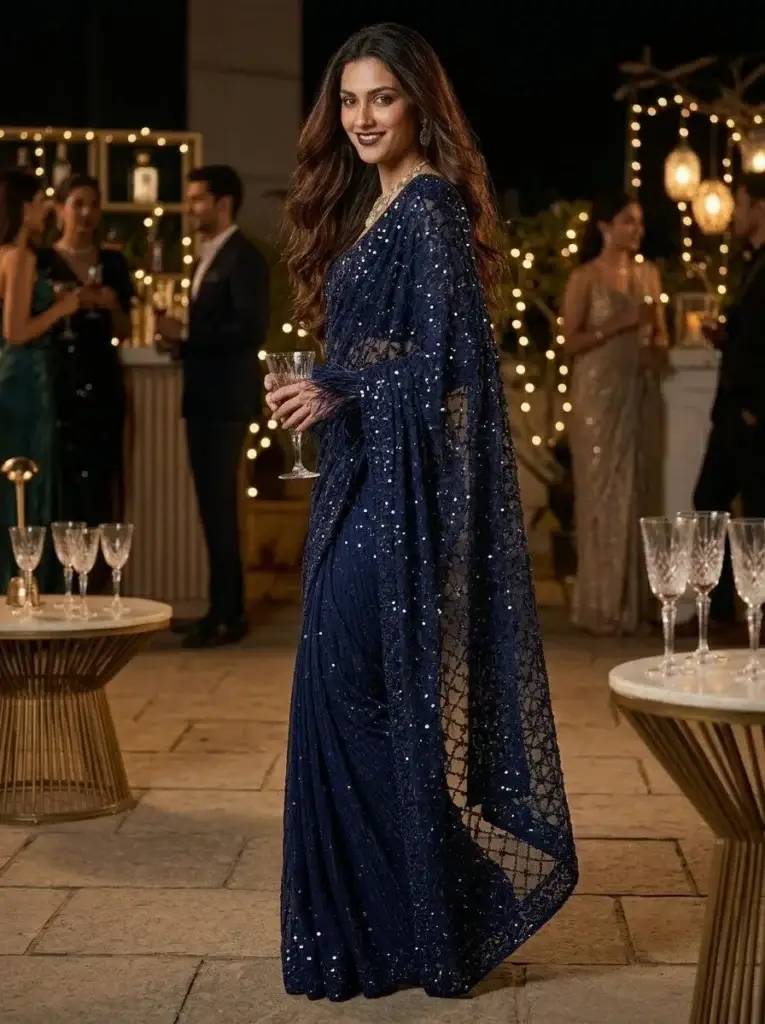
Party and festive purchases follow a different rhythm from weddings. Weddings are planned weeks or months ahead, but a cocktail party, an anniversary dinner or a farewell is often decided only a few days before. That pushes the customer towards sarees available on the shelf right now, which is where ready stock of lightweight party wear sarees earns its place. A designer sarees manufacturer in India that offers short repeat-order cycles lets you restock quickly when a party style starts selling.
Festive gatherings sit in the middle. Customers plan for them, but they still want to see and feel the saree before buying. Corporate and formal events deserve a separate segment altogether. Customers there prefer subtle colours, controlled embellishment and fabrics that stay neat through a long day, so mixing them with heavy party pieces confuses both your display and your sales.
5 Filters to Evaluate Any Designer Saree
Instead of judging a saree only on how attractive it looks, test it against five filters.
- Wearability: Can the customer wear it comfortably through the whole event?
- Visual impact: How does it look in photographs and in person?
- Value perception: Does the price match what the customer sees and feels?
- Repeatability: Can the same quality be produced again in bulk?
- Return risk: Do delicate stones, stiff fabric or unusual colours increase complaints?
Don't Build a Collection Without Understanding Your Customer
A boutique serving brides, a multi-brand store serving walk-in families and an online seller shipping across states need very different collections. Boutiques can carry fewer, more exclusive pieces and sell the story behind them. Multi-brand stores need a wider price spread. Online sellers need designs that look accurate on screen and survive shipping.
Your own past sales data is the best guide. Look at which colours, price points and occasions sold without discounts, and which stayed on the rack. Region and community matter too. Preferences in Gujarat, Maharashtra, Punjab, Bengal and the South differ in colour, drape and the amount of work customers expect. An experienced Indian saree manufacturer can often suggest these regional adjustments, since they see what moves in different markets across the season.Collection Architecture: How to Balance Your Range
A balanced range has three layers. Hero pieces are the eye-catching designs that draw attention and build your brand image, even if only a few sell. The core range is the dependable middle that earns most of your revenue. Entry-price pieces bring in new customers who may return later for bigger purchases. Many retailers prefer to source all three layers from one designer sarees manufacturer in India so that colour, finish and pricing stay consistent across the range.
Within each occasion, a clear price ladder helps customers choose without confusion. For example, you might offer a few accessible party wear options, a wider mid-range of festive and guest sarees, and a small premium bridal section. Evergreen styles in classic colours should form the larger share, with seasonal styles added in smaller quantities. Starting with a small lot from a wholesale designer sarees range lets you test a new style before committing real capital, so a trend that fades does not trap your money.
The Real Cost of a Wrong Choice
The real cost of a wrong saree is rarely just the purchase price. Dead stock ties up working capital that could have funded faster-moving designs, forces discounting that trains customers to wait for sales, and takes up valuable shelf space. Returns hurt too, because every disappointed customer talks, and a brand’s reputation is built or damaged by small experiences like these.
A simple risk calculator helps. Estimated loss equals unsold pieces multiplied by cost per piece multiplied by the discount percentage, plus the cost of handling returns. For example, if 20 sarees priced at 3,000 rupees each remain unsold and you finally clear them at a 30 percent discount, you give up about 18,000 rupees of revenue. That figure does not yet include storage or the capital that stayed blocked. Run this number before ordering a large quantity of any new design, and discuss it openly with a dependable saree manufacturer in India so that quantities are planned around real demand.Questions to Ask a Designer Sarees Manufacturer in India (Due Diligence)
Capability and Consistency: Design, Sampling and Bulk Quality
Flexibility: MOQ, Customization, Exclusivity and Lead Time
Understand the minimum order quantity for each design and whether it can be mixed across colours. Ask whether custom colours, blouse variations or private-label packaging are possible, and whether an approved design can be kept exclusive to you for a defined period. Our page on custom and bulk order options explains how this process usually works. Clarify lead times in writing, especially for heavily handworked pieces, since wedding and festive seasons put pressure on every workshop.
Red Flags You Can Spot in the First Conversation
Real Buyer Scenarios
Tier-2 City Boutique: The First Wedding-Season Order
Online Seller: Reducing Returns in a Party Wear Range
Wedding Stylist: A Coordinated Bulk Order for One Event
Common Myths in Occasion-Based Sourcing
The first myth is that a heavier saree is automatically more premium. Weight and embellishment add cost, but customers pay for how a saree looks and feels, and an over-heavy piece is often returned or left unworn. The second myth is that following trends is the safe option. Trends peak and fade quickly, so safe buying means anchoring on evergreen colours and silhouettes and testing trends in small lots.
The third myth is that the cheapest designer sarees manufacturer in India is automatically the smartest choice. A low rate often hides compromised fabric, thin work or inconsistent bulk quality, and the cost shows up later as returns. The fourth myth is that last-minute orders will work in wedding season. Skilled workshops fill up early at that time, so placing orders in advance protects both quality and delivery.Buyer Decision Checklist
Keep this short checklist handy before placing any occasion-based order with a designer sarees manufacturer in India:
- Occasion brief written (wearer, venue, duration, budget)
- Saree passes at least four of the five filters
- Approved sample matches the bulk lot
- MOQ, lead time and exclusivity confirmed in writing
- Return and defect policy understood
- Quantity checked against the risk calculator
Conclusion
Choosing designer sarees for weddings, parties and special occasions becomes much easier when each purchase is treated as a decision rather than a guess. Write an occasion brief, run every design through the five filters, balance your range, calculate the risk, and partner with a dependable designer sarees manufacturer in India who values consistency as much as creativity. To see how these ideas translate into real collections, explore Tapitara and send an enquiry for a catalogue or samples.